
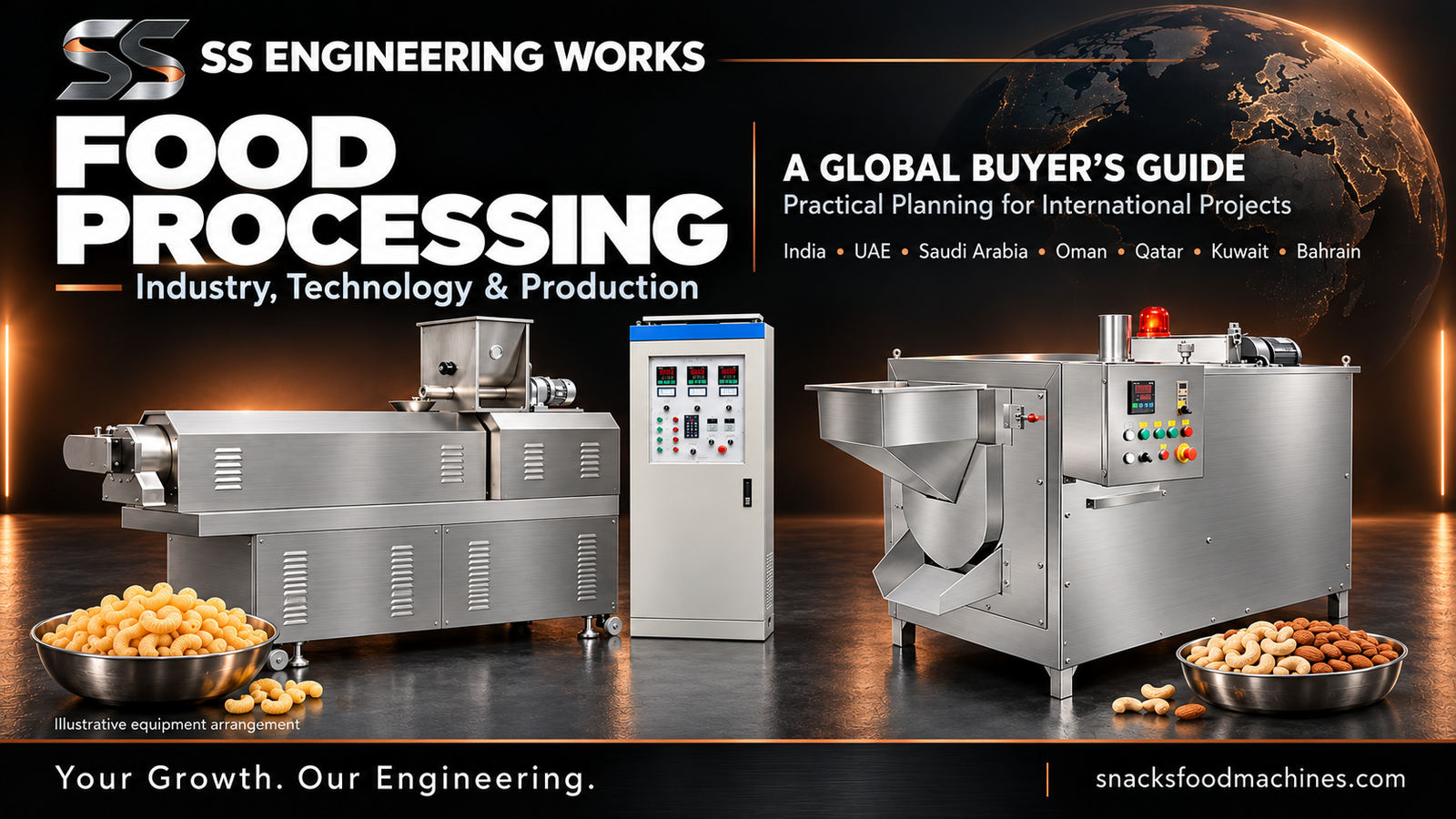
SS Engineering Works · A Global Buyer’s Guide
Food Processing: 7 Best Tips for Global Plant Planning
Food processing starts with a clear product brief. Your ingredients, intended finished food, production target and factory conditions should guide the technology and machinery selected for the project.
For snack, frying, roasting or pasta projects, SS Engineering Works can discuss the proposed equipment scope around your requirement. This guide explains seven planning decisions for businesses in India, Gulf countries and other international enquiry markets.
01 / Start with the finished product
What is food processing, and what do you want to make?
Food processing uses suitable operations to prepare or transform ingredients into food products. The actual sequence depends on the material and intended result: extruding a corn snack, frying a pellet, roasting a nut and making dried pasta require different discussions.
Begin with a sample, photograph or written product specification. Describe the shape, texture, appearance, flavour and intended pack format. Identify whether the project is a new production unit, an expansion or a replacement stage.
Connect the product brief with the way you expect to operate. Identify the number of products, typical order size and intended shifts. Explain which ingredients you can source consistently and which parts of the formulation are still being developed.
For food processing equipment selection, distinguish a commercial goal from a result already demonstrated on a machine. A target texture, output or pack format becomes more useful when the proposal explains how it will be evaluated.
The food processing industry sits within a wider supply chain. The FAO overview of agrifood systems places processing alongside activities such as packaging, transport and distribution. Your equipment plan should account for the stages around the machine.
Four details that make a better brief
- Ingredient: material, preparation and supplier specification.
- Product: sample, dimensions and required finish.
- Production: finished quantity and operating hours.
- Factory: location, space and available services.
02 / Connect food and technology
Food technology and food production: how the terms connect
Food technology applies scientific knowledge to practical food operations. Food production is the broader activity of making the intended product. Food processing describes the operations used to prepare or transform the ingredients within that plan.
The Institute of Food Technologists’ overview explains the connection between food science, technology and engineering. Use that context to ask specific questions about the process proposed for your product.
For a machinery enquiry, connect these terms to decisions you can evaluate: your ingredient specification, process route, controls, product checks and equipment list. A technology label alone does not establish suitability for your recipe.
| Planning area | What to define |
|---|---|
| Food processing industry | Your product category, customers, intended production scale and equipment requirement. |
| Food technology | The process approach, ingredient requirements and checks relevant to the finished food. |
| Food production | Output, shifts, staffing, material handling and the connection between production stages. |
| Equipment selection | The proposed model, functions, utilities, trials and written supply scope. |
Use the same product brief when comparing suppliers. Ask each proposal to identify its assumptions so you can compare equivalent equipment and production conditions.
Food processing technology also involves the relationship between preparation, the main operation and finishing. Changing an ingredient or product dimension can require another review of the proposed route. Record product changes during development so the final enquiry matches what you intend to manufacture.
Ask your team which details are settled and which need trials. Identify the ingredient supplier, product-development contact and factory installation contact. Bringing these inputs together helps the machinery discussion address the actual production requirement.
03 / Map the complete product flow
Plan the process of food processing before selecting machines
Draw a simple sequence from incoming ingredients to the finished pack. Identify preparation, the main processing operation, any finishing required, and transfer to packing. Review the actual route against your product rather than assuming every food follows one sequence.
Prepare the ingredients
Specify material condition, storage, preparation, mixing and feeding where required. Include equipment already available at your factory.
Process and finish
Discuss the selected extrusion, frying, roasting or pasta process. Identify drying, cooling, seasoning or other stages needed for the intended product.
Handle and pack
Review transfer, finished-product condition and the proposed packaging interface. Match the handling arrangement with your output and pack format.
A clear food processing flow makes supply boundaries easier to review. List each stage as existing, included in the proposal, optional or provided separately.
Check the packing interface early
State the intended pack size and the condition of product reaching the packing stage. Share the requirements of existing weighing or packaging equipment, including its loading arrangement and the product presentation it expects.
Identify whether transfers are manual or use handling equipment included in the proposal. Review the space between stages and the way product will be held during changes or interruptions. Include these interfaces in the layout discussion.
For packaging materials, specify the roll requirements of the downstream operation separately. A laminate rewinding enquiry needs its own material and roll brief alongside the food-production equipment plan.
Three application examples to discuss
- Puffed corn snacks: review preparation, extrusion, the required finishing route, seasoning and product transfer to packing for the proposed recipe.
- Fryum pellets: identify pellet feeding, the selected frying arrangement, product discharge and any cooling or seasoning required before packing.
- Dried pasta: discuss ingredient mixing, extrusion and cutting alongside drying, cooling and finished-product handling.
These examples help structure a food processing enquiry. The equipment list and operating approach should be agreed for the particular product and configuration.
04 / Match equipment to the application
Explore food processing machinery with SS Engineering Works
Start with the application closest to your product brief. These machines represent separate processing discussions; confirm recipe suitability, capacity basis and supporting stages for the selected configuration.
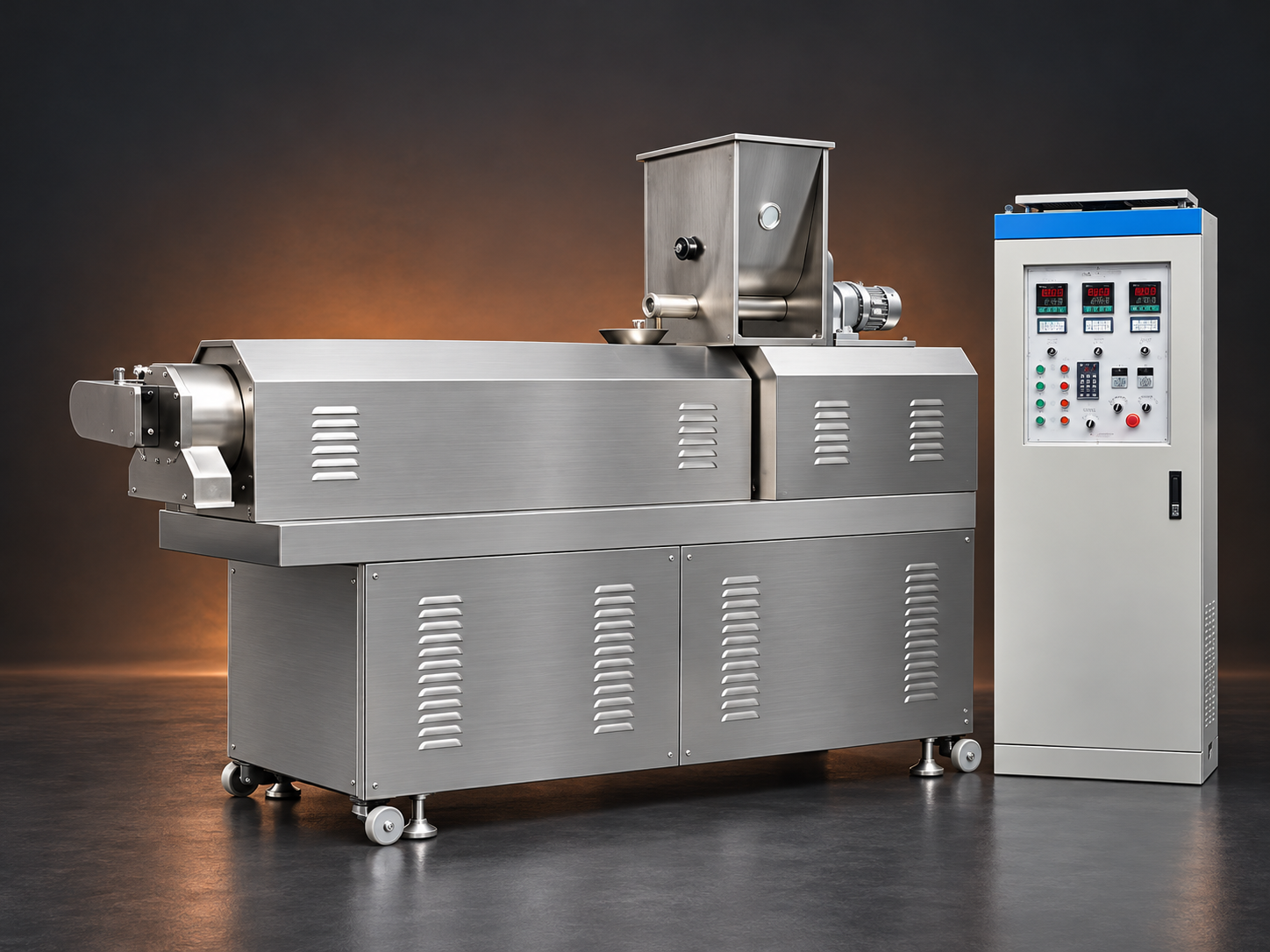
Twin Screw Puff Snack Extruder
Share your ingredient blend, intended snack shape and output. Review the extrusion configuration, tooling and required finishing stages.
Explore the extruder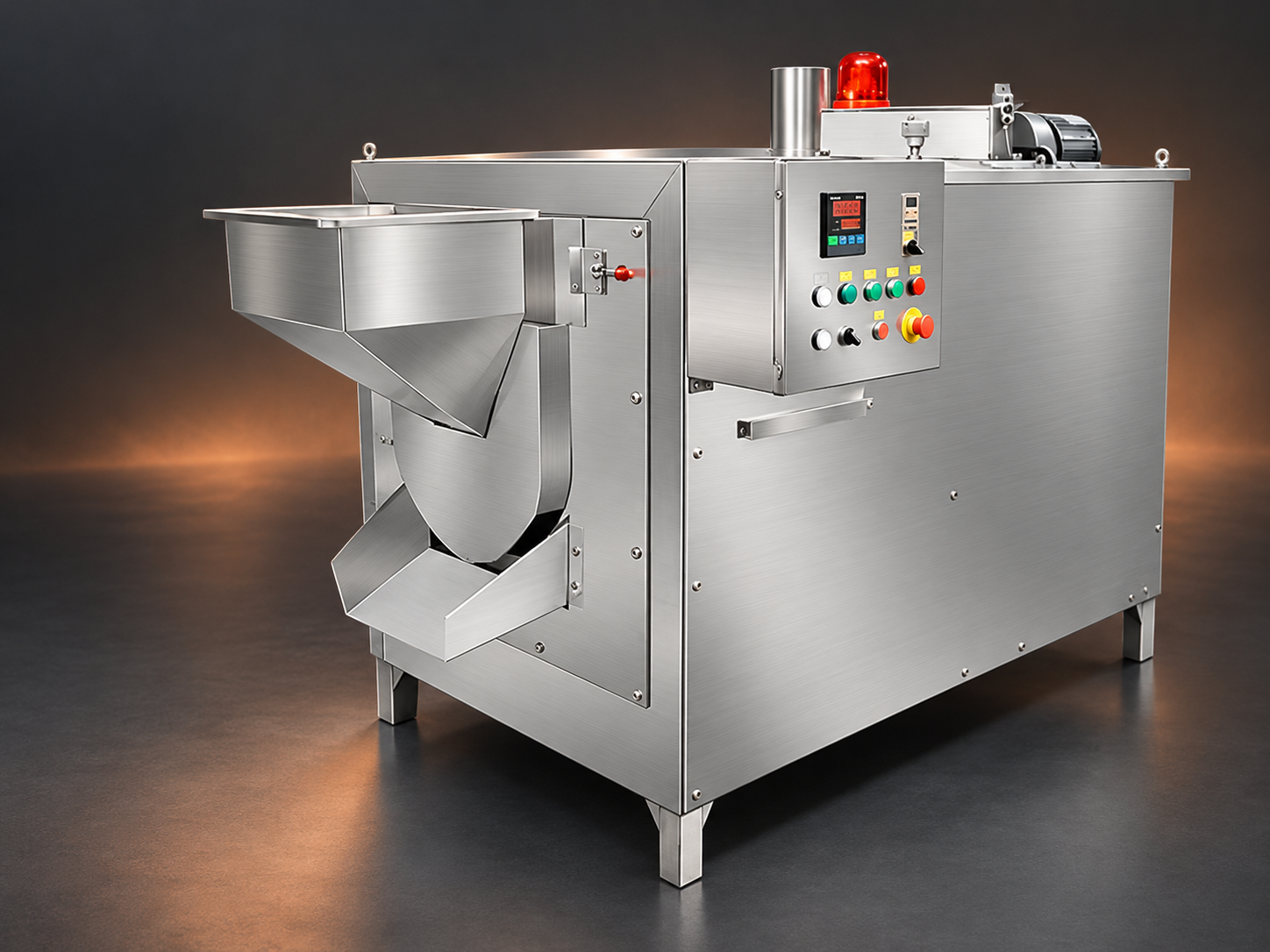
Dry Fruit Roasting Machine
Provide your nut sample, desired roast and production schedule. Discuss heating, loading, discharge and any cooling or seasoning scope.
Explore roasting equipment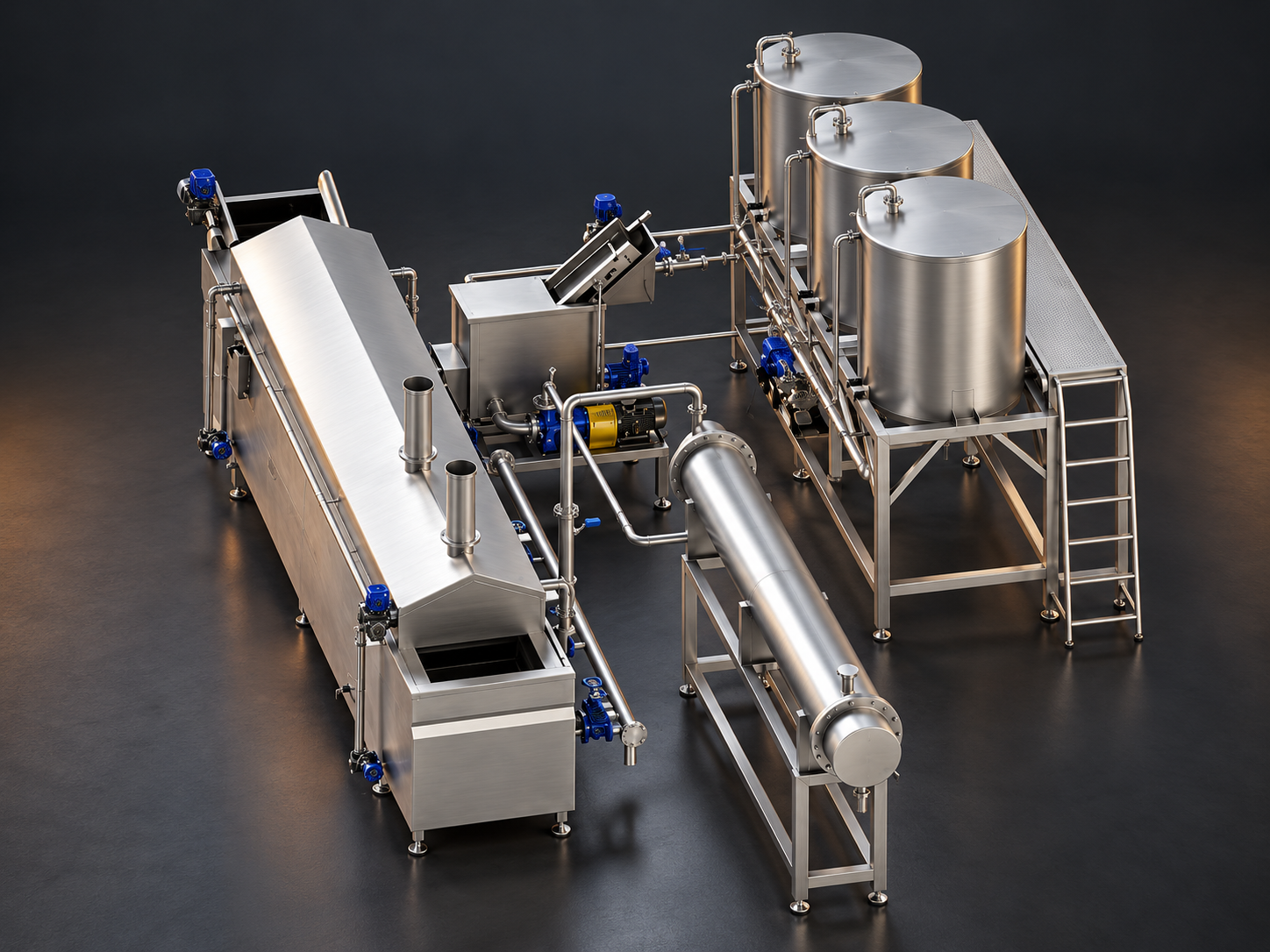
Continuous Fryums Fryer
Share the pellet type, finished snack reference and output target. Review feeding, frying, oil handling and downstream product transfer.
Explore the fryums fryerOther extrusion enquiries
Explore Kurkure-type corn snack machinery and the Indian Puffed Snacks Extruder against your specific product requirements.
Compare frying arrangements
Review the Batch Fryer for Fryums and Continuous Fryer Line when comparing production schedules and equipment scope.
Pasta and packaging materials
Discuss a Pasta Making Machine for pasta projects. For a separate packaging-roll requirement, explore the Laminate Rewinding Machine .
See the complete machinery range and our Snacks Food Machines buyer’s guide for wider equipment planning.
05 / Compare output and factory requirements
Connect food production targets with utilities and layout
For a food processing proposal, specify whether your output target refers to ingredient input, machine discharge or finished saleable product. Include the intended operating hours and product-change schedule.
Ask how the selected equipment connects to upstream and downstream stages. Compare proposals using the same recipe, product condition and working assumptions, including loading, cleaning and changeover time.
Available utilities
Share voltage, phase, frequency, available load and the heating utilities at your site. Confirm requirements for every included machine.
Factory layout
Provide the floor plan, access dimensions and service positions. Review working space, maintenance access and product movement.
Scope and support
Request an itemised equipment list covering controls, accessories, training, installation and spare-parts arrangements agreed for the order.
Compare the operating plan as well as the purchase price
Food processing proposals are easier to compare when their commercial and operating assumptions are separated. Ask for the information behind an estimate and use your own site costs when preparing a project budget.
| Comparison point | What to review |
|---|---|
| Capacity basis | Confirm the product, measured output point, operating period and assumptions used for the stated production figure. |
| Energy information | Keep connected load separate from measured consumption. Ask which operating conditions support any quoted consumption estimate. |
| Labour and handling | Review loading, transfer, unloading, product changes and cleaning tasks across the complete proposed working sequence. |
| Maintenance and spares | Identify routine access, maintenance documentation and the spare parts included or recommended for the selected configuration. |
| Commercial inclusions | Compare the machinery, accessories, packing, delivery and support items expressly listed in each proposal. |
06 / Agree trials and operating procedures
Plan product trials, hygiene and routine equipment access
Food processing equipment should be assessed against the intended product. Agree the trial material, proposed configuration and observations to record. Retain identified samples and compare the finished results with your product brief.
Review food-contact materials, cleaning access, guarding, operating instructions and maintenance requirements. Include preparation and shutdown arrangements in the discussion with your production and site teams.
For a food processing trial, agree the material quantity, sample identity, equipment setup and product observations in advance. Review the finished sample after the relevant downstream stages, since the product at machine discharge may not be the final packed product.
Keep a short trial record containing the ingredients used, configuration, operating observations and follow-up actions. Ask which output, product characteristics and equipment functions were actually demonstrated, and which items still need review before the order is finalised.
Prepare representative materials for the discussion
Label the material sample with its source, preparation and the product you intend to make. Share the supplier information available to you, and note any differences between the sample and the material expected during regular production.
For food processing enquiries involving more than one recipe, list the products individually. Ask which change parts, cleaning steps and operating adjustments need review when moving between them. Keep any unresolved suitability questions in the project record.
Discuss recipe changes and cleaning between different products as part of the operating plan. Your production and quality teams should define the relevant procedures and checks for the intended food, with appropriate documentation and training for the people operating the equipment.
The FAO Good Hygiene Practices and HACCP Toolbox provides background on equipment design, cleaning, maintenance, training and food-production controls. Apply the procedures developed for your own operation alongside the supplied equipment instructions.
07 / Prepare the installation-country brief
Food processing projects for India, Gulf and global enquiry markets
SS Engineering Works is based in India. International project discussions begin with your destination, intended food product and factory conditions. Available configuration, delivery and support arrangements are confirmed for the individual proposal.
UAE, Saudi Arabia, Oman, Qatar, Kuwait and Bahrain
Share the installation city, factory utilities and delivery point. Include the product sample, output requirement and any existing process stages.
India, Nepal, Sri Lanka and other Asian projects
Provide ingredient specifications, floor area and your operating schedule. Review the machinery arrangement against local materials and existing equipment.
Tanzania, Ghana, Zambia and wider international enquiries
Identify the intended product, available utilities and site access. Agree delivery, unloading, documentation and support scope with the quotation.
Record the agreed delivery term, named place and responsibilities in the commercial proposal. The ICC overview of Incoterms rules is a reference for the delivery discussion.
Before dispatch planning, confirm the installation address, unloading access, available handling equipment and site readiness. Identify the people responsible for utility connections, equipment placement and any agreed installation work so these tasks can be coordinated with the supplier.
For a food processing project outside India, ask which manuals, packing information and order documents will be supplied. Clarify the agreed communication, training and support arrangements, including any work your local team will carry out.
Close the loop before confirming the machinery scope
Review the latest equipment list against the product brief and layout. Check that requested dies, accessories, handling stages and agreed support items are identified consistently across the proposal. Ask for clarification where descriptions or assumptions differ.
Keep the final product reference, agreed scope and site information together for your team. This gives production, purchasing and installation contacts a common starting point when coordinating the next stage of the project.
For another location, choose the proposed installation country below and prepare a brief. Each destination enquiry is reviewed for equipment availability, delivery arrangements and support scope.
Prepare your project enquiry
Discuss food processing with SS Engineering Works
Choose your proposed destination and describe the product you want to manufacture. Copy the prepared brief and use our Contact page to begin the discussion.
Learn about SS Engineering Works and founder Sameer Ahmed before reviewing your machinery requirement.
- Product sample and ingredient information.
- Finished output, utilities and site layout.
- Required equipment stages and project timeline.
Build a brief to copy
The brief is prepared on this page. Send it through your chosen contact method.
Questions before requesting a proposal
Food processing: frequently asked questions
What does the food processing industry include?
It includes a broad range of operations that prepare or transform ingredients into food products. Your machinery enquiry should focus on the particular product, recipe and processing stages required by your business.
How do food and technology work together in a plant?
Ingredient knowledge, process design, equipment controls and product checks work together to define the production approach. Review the proposed technology against your actual recipe, trials and finished-product requirements.
How should I choose machinery for food production?
Start with the food sample, required finished output, available utilities and layout. Request an equipment list identifying the proposed model, included stages, controls and assumptions behind the quotation.
Does one machine include the complete production line?
Check the written supply scope. Preparation, extrusion, frying, drying, cooling, seasoning and packing are separate stages where required. Only equipment expressly included forms part of the proposed supply.
Can I enquire for a factory outside India?
Yes. Share the country, city, intended product, electrical details and available services. The supplier should confirm the available configuration, delivery documents and agreed support arrangements for that project.
What information is needed for a machinery price?
Provide the product and ingredient reference, output target, equipment stages and factory conditions. A useful quotation identifies the selected configuration and commercial scope rather than a price without specifications.
SS Engineering Works · Food Industry Project Enquiries
Bring your product idea. Start a practical machinery discussion.
Plan your food processing requirement around your ingredients, production target and installation site. Share the details so the proposed machinery scope can be reviewed.
Your Growth. Our Engineering.