
LAMINATE REWINDING MACHINE WORKING PROCESS
Discover 7 practical tips for better packaging film rolls, reliable winding, web tension management, common roll defects and smart equipment selection.
Explore This Article ☰
Laminate Rewinding Machine: An Essential Packaging Equipment Guide
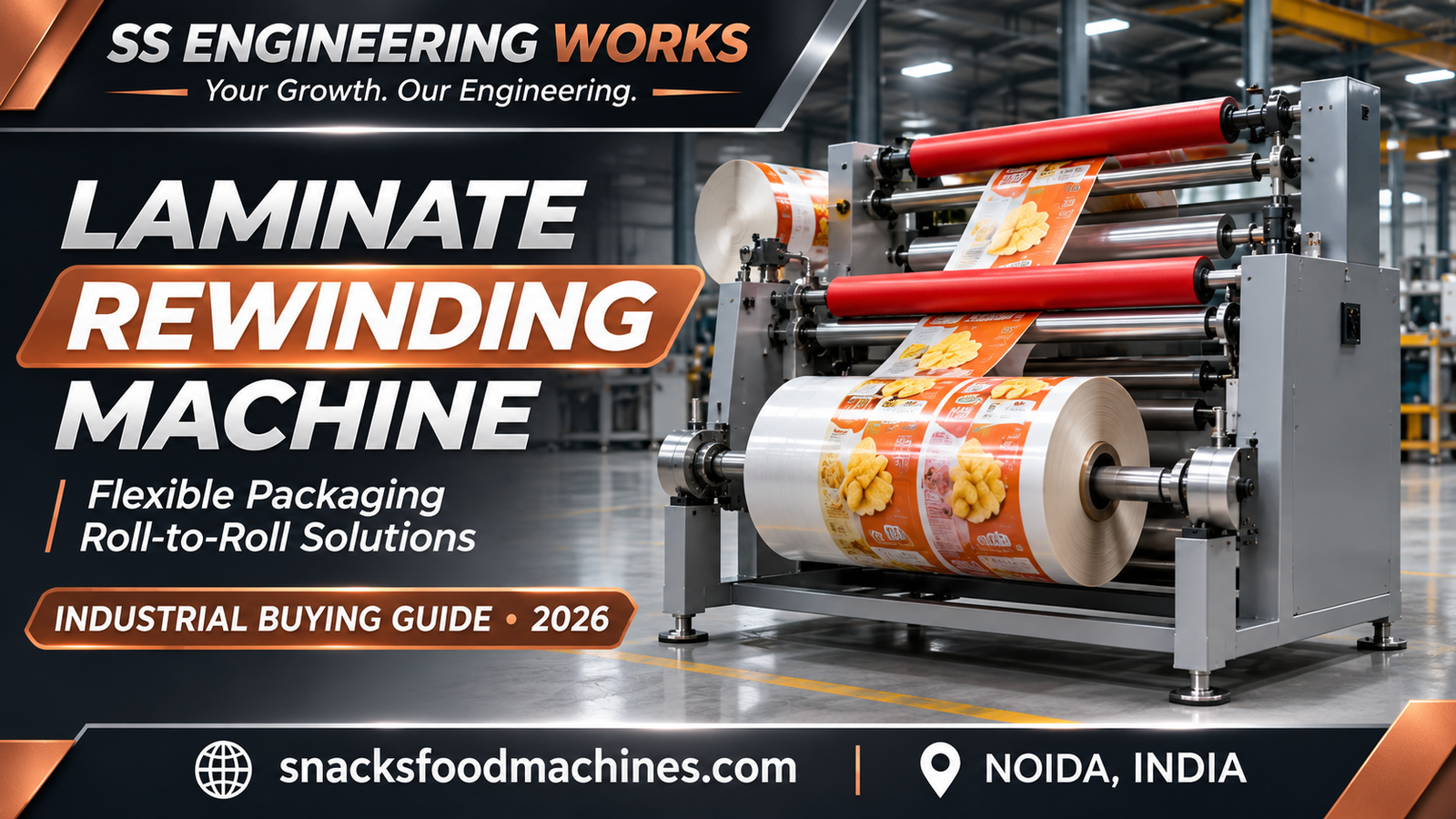
A laminate rewinding machine is used to transfer a continuous flexible packaging web from a parent roll to another receiving roll or core. This operation helps prepare packaging material for further converting, handling or packing processes.
In packaging manufacturing, different processes may require different finished roll dimensions. Printed films, laminated packaging material and other suitable webs must be prepared according to roll diameter, winding direction, core size, web width and downstream equipment requirements.
Understanding the laminate rewinding machine working process helps packaging companies evaluate machine selection, web handling, roll quality and operating requirements before investing in a new system.
Successful rewinding requires a suitable combination of material compatibility, controlled web movement, correct winding direction and a clear finished-roll specification.
SS ENGINEERING WORKS provides machinery enquiry support for packaging roll preparation. Buyers should confirm each proposed machine's supported roll dimensions, drive arrangement, controls and included features through a current written quotation.
Laminate Rewinding Machine Working Process: Step-by-Step Explanation
The laminate rewinding machine working process involves unwinding a packaging material roll, guiding the moving web and forming a new finished roll. The actual machine layout and control systems depend on the model.
Parent Roll Loading
The incoming packaging roll is placed on the specified unwind shaft or roll holding arrangement. Material width, weight, roll diameter and core size should be checked before loading.
Safe handling is especially important when the material arrives on large industrial reels. Operators must use the loading method specified for the machine.
Film Web Threading
The film is guided through the correct roller path from the unwind section toward the receiving core. Proper threading supports stable web travel and reduces avoidable handling errors.
Misalignment or incorrect threading can contribute to web wandering, wrinkles or irregular roll formation.
Web Tension Adjustment
The operator selects the controls available on the chosen equipment. Appropriate winding conditions depend on film construction, width, thickness and material sensitivity.
Some configurations may incorporate additional measurement or automatic control functions. These should not be assumed to be included in every model.
Controlled Film Rewinding
During the active laminate rewinding machine working process, packaging material transfers onto the receiving core. Operators monitor web alignment and roll formation.
As roll diameter changes, suitable machine settings are important for consistent winding behaviour.
Finished Roll Inspection
The completed roll is checked against the required winding direction, roll dimensions, edge alignment and relevant quality criteria.
Material must be unloaded according to the machine's safety procedure before being moved to the next operation.
This is a general process overview rather than a universal machine operating instruction. Machine-specific operating procedures and safety requirements always take priority.
Main Components of a Laminate Rewinding Machine
Before comparing industrial equipment quotations, packaging converters should understand how the principal machine sections work together. The final configuration will depend on the material and planned output.
Unwind Station
Holds and supports the incoming parent roll. Shaft compatibility and loading space are key planning considerations.
Guide Rollers
Direct the film through the machine web path and support appropriate contact and alignment.
Web Tension System
Supports control of material tension. Adjustment and automation capabilities vary across machine designs.
Rewind Station
Holds the receiving core and forms the finished material roll according to the required configuration.
Drive Arrangement
Provides machine movement with the selected operating and winding control characteristics.
Operator Controls
Provide access to functions included in the supplied model, such as running and stopping controls.
To understand general industrial web tension principles, read the Maxcess Tension Control Technical Resource . This independent reference explains tension management principles; it does not specify the features of an SS Engineering Works machine.
7 Best Tips to Improve the Laminate Rewinding Machine Working Process
Improving the laminate rewinding machine working process means focusing on repeatable roll quality, suitable material handling and clear operating checks rather than machine speed alone.
Check the Incoming Parent Roll
Review the material condition, roll edges, core size, diameter and weight before loading. An incoming roll with serious defects can complicate winding even when the machine is functioning correctly.
Use Suitable Film Tension
Tension affects how a moving web travels and forms the new roll. The correct setting depends on film structure, thickness, width and the supported equipment design. Avoid copying settings from an unrelated material.
Maintain Proper Web Alignment
Correct roller alignment and web threading help reduce film wandering and uneven edges. Inspect the web path using the manufacturer's safe maintenance procedure whenever unusual tracking occurs.
Select the Correct Receiving Core
Core compatibility is important for roll stability and downstream equipment handling. Confirm core inside diameter, support arrangement and finished roll dimensions before beginning the winding operation.
Compare Quality at Practical Speed
A machine's maximum rated speed does not guarantee equivalent production under every operating condition. Compare results using your actual material, expected changeover time and acceptable winding quality.
Inspect Completed Roll Quality
Check finished roll edges, dimensions, winding direction and visible defects. Record recurring problems so production teams can investigate their root causes.
Plan Regular Preventive Maintenance
Follow the selected machine's maintenance instructions for rollers, drive components, controls, guards and roll-handling parts. Maintenance helps identify wear and supports consistent operating conditions.
These seven checks give packaging businesses a practical framework for improving their laminate rewinding machine working process. Actual adjustments must follow the approved operating instructions for each machine.
Common Problems During the Laminate Rewinding Machine Working Process
Roll quality problems can result from material characteristics, winding conditions, alignment or machine configuration. The following table outlines possible causes worth investigating.
| Problem | Possible Cause | What to Check |
|---|---|---|
| Wrinkling | Incorrect web path, uneven tension, material variation or roller alignment. | Film condition, roller path, approved tension settings. |
| Telescoping | Sideways roll movement, unstable winding or core support problems. | Roll formation, support, alignment and winding profile. |
| Loose Winding | Unsuitable winding conditions, inadequate core grip or drive setup. | Receiving core, selected controls and roll quality. |
| Uneven Roll Edges | Incoming roll irregularity, web wandering or alignment issues. | Input roll quality, guiding arrangement and web path. |
| Film Breakage | Excessive pull, damaged film, sharp contact surfaces or handling faults. | Film strength, web path, tension and roller condition. |
Stop and secure the equipment before checking mechanical problems. Never attempt to correct roll defects by reaching into moving machinery.
Laminate Rewinding Machine vs Slitter Rewinder vs Laminating Machine
Industrial packaging buyers often compare related machine names, but these systems are designed for different operations. Understanding the difference helps prevent an unsuitable equipment purchase.
| Machine | Main Function | Typical Application |
|---|---|---|
| Laminate Rewinder | Transfers an existing flexible packaging web onto another roll. | Roll preparation for downstream converting or packing. |
| Slitter Rewinder | Cuts a wider material web into narrower strips and rewinds them. | Producing reels of required widths. |
| Laminating Machine | Bonds suitable material layers together into a composite structure. | Producing multilayer packaging film. |
| Inspection Rewinder | Re-reels material with applicable inspection or defect-handling functions. | Film examination and re-reeling. |
A laminate rewinding machine working process does not automatically include film slitting, printing, layer bonding or camera inspection. Any combined functions must be listed in the specific equipment quotation.
Flexible Packaging Applications for Laminate Rewinding Machines
Film rewinders are relevant to packaging converters, printing businesses, film suppliers and manufacturers handling suitable roll-fed packaging materials.
Material compatibility is not universal. Thickness, coating, friction, stiffness, surface condition and roll dimensions should be evaluated for the proposed machine configuration.
Packaging Industries to Consider
- Flexible packaging film converters preparing rolls for additional processes.
- Printed packaging film businesses handling approved roll-fed materials.
- Food and snack packaging suppliers preparing laminate rolls for packing lines.
- Packaging material distributors requiring specified roll formats.
- Industrial converting units comparing new material-handling equipment.
Before purchasing, arrange a technical review of your actual film and intended end use. This helps establish whether the proposed rewinding arrangement is suitable.
Laminate Rewinding Machine Price in India: Important Buying Factors
The price of industrial film rewinding equipment depends on its working width, supported roll sizes, drive arrangement, required controls and the scope of supply. Prices cannot be meaningfully compared without reviewing technical specifications.
For a commercial quotation, prepare the following information before contacting a manufacturer or supplier.
Practical Production Output
The actual output of a rewinding operation depends on running speed, roll-change time, inspection, stoppages and acceptable roll quality. Maximum rated speed should not be treated as guaranteed production throughput.
For example, an assumed running speed of 100 metres per minute for 30 minutes gives 3,000 metres of theoretical material movement. This is an illustration, not a specification of any SS Engineering Works machine.
For a more detailed comparison, read the existing SS Engineering Works 9 Essential Laminate Rewinding Machine Buying Checks .
Buyers requiring urgent dispatch can ask about currently available equipment, but ready-stock status, machine condition, model specifications, price and delivery should be verified directly.
Laminate Rewinding Machine Working Process: Frequently Asked Questions
What is the laminate rewinding machine working process? +
It involves loading a parent roll, guiding the film, applying the selected winding conditions, transferring the material onto a receiving core and inspecting the finished roll.
Why is tension control important? +
Suitable tension helps manage moving-web behaviour and roll formation. Settings depend on film properties and machine design.
Which packaging films can be rewound? +
BOPP, PET, CPP and other compatible laminates are common enquiry materials. Suitability must be confirmed for the proposed equipment model.
Can a rewinding machine cut film? +
Slitting requires a suitable cutting arrangement. It is not automatically included in every rewinding machine.
What causes wrinkles in rewound film? +
Possible causes include web misalignment, material defects, uneven tension or unsuitable machine conditions.
How much does a laminate rewinder cost? +
Price depends on working width, roll capacity, controls, accessories and the agreed commercial supply scope.
Where can I enquire about a laminate rewinding machine in Noida? +
Contact SS ENGINEERING WORKS with your packaging film specifications and required finished-roll details.
Need a Laminate Rewinding Machine for Your Packaging Business?
Share your film material, input roll dimensions, finished-roll requirements and project location with SS ENGINEERING WORKS.
Educational industrial guide. Product imagery is illustrative. Machine specifications, automation, capacities, availability and commercial conditions must be confirmed in a current written quotation.