
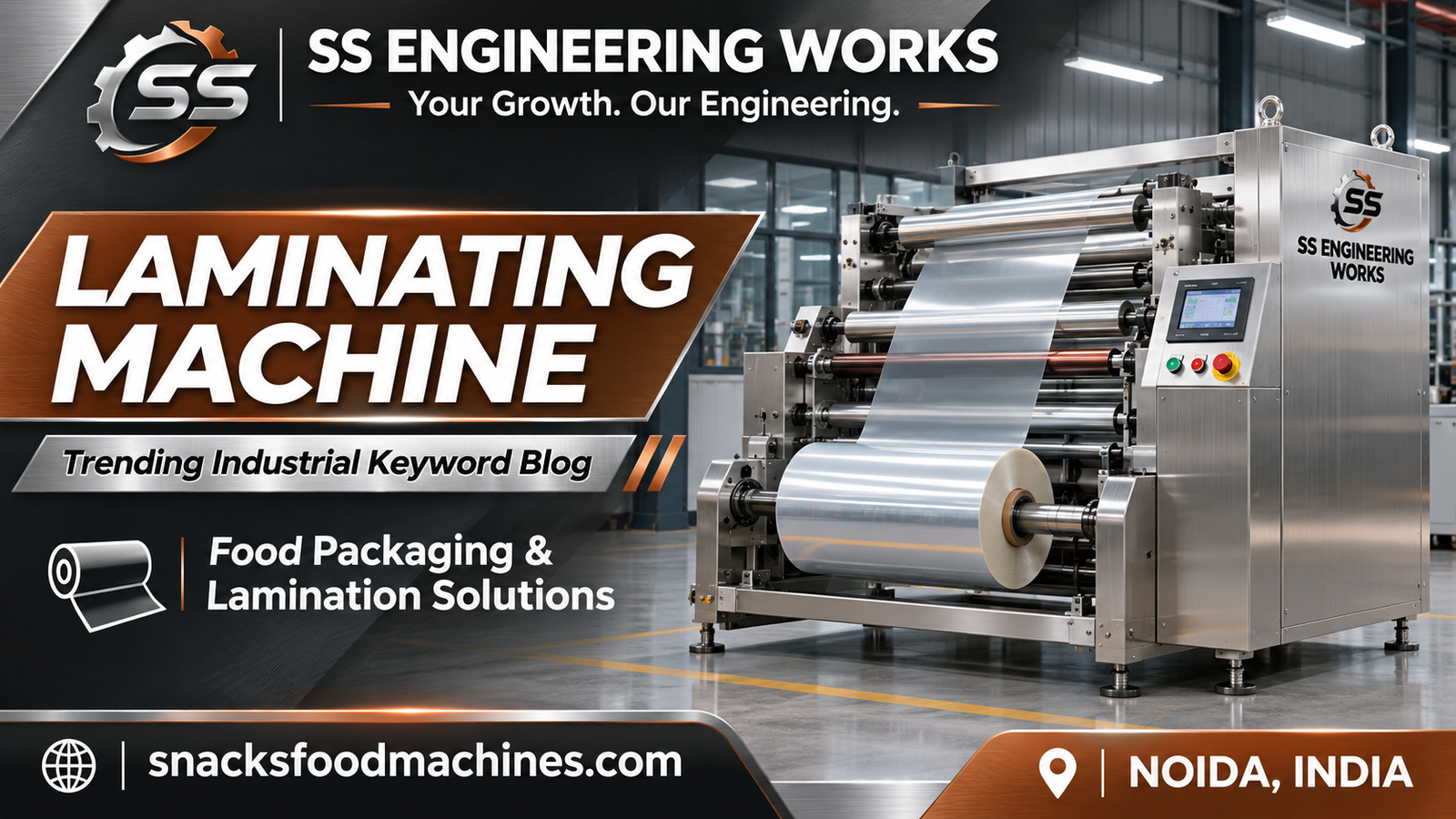
Laminating Machine for Flexible Packaging
Types, working process, practical buying checks and the important difference between a laminating machine and a laminate rewinding machine.
Explore This Article ☰
What Is a Laminating Machine for Flexible Packaging?
A laminating machine for flexible packaging combines two or more material webs to form a multi-layer structure. Manufacturers may bond films, paper or foil using a selected adhesive, heat or an extruded resin layer. The aim is to create a package structure suited to its intended product, barrier properties, appearance and converting requirements.
For example, snack packaging may combine a printable outer film with one or more functional layers. The exact structure depends on what is being packed, shelf-life expectations, sealing method, transport conditions and applicable food-contact requirements. A lamination method cannot be chosen only by looking at the machine price.
Laminating joins layers. Rewinding transfers a film or laminate onto another roll. Slitting cuts a wider web into narrower widths. These are different machine functions.
SS Engineering Works, based in Noida, lists laminate rewinding equipment for packaging material handling. This guide explains the wider laminating process so buyers can plan the complete production sequence and make an informed machinery enquiry.
How Does an Industrial Laminating Machine Work?
Different machine designs have different web paths and control systems. A flexible-packaging lamination process often follows these stages. Operating conditions must be validated for the film and adhesive system.
Material Unwinding
Two or more webs are fed from separate unwind positions. Surface quality, winding direction and web tension influence downstream handling.
Surface Preparation & Bonding
Adhesive or bonding resin is applied where required. Some substrates also need surface treatment or priming for the intended bond.
Drying or Reaction
Solvent-based and water-based systems generally require carrier removal. Solventless systems do not require a carrier-drying stage, but curing may still be necessary.
Laminating Nip
Webs are joined under temperature and pressure conditions appropriate for the particular process and material construction.
Rewinding & Conditioning
The laminated web is wound into a roll. Additional curing, inspection, slitting or roll-size preparation may be required.
Correct winding conditions matter even after successful bonding. Poor web alignment, improper tension or unsuitable core selection can complicate storage, slitting and packaging operations. Buyers should specify the finished roll as carefully as the lamination process itself.
Types of Flexible Packaging Laminating Machines
The term "laminating machine" includes several different technologies. Equipment selection depends on how layers are bonded, which materials are used and the required finished packaging performance.
Solvent-Based / Dry Lamination
Adhesive is applied with a solvent carrier, which is removed in a drying stage before layers are joined. Dryer performance, emissions controls, adhesives and curing require engineering review.
Solventless Lamination
Uses reactive adhesive systems without a solvent or water carrier. It can avoid a carrier-drying oven, although mixing, coating control, curing time and packaging safety need validation.
Water-Based Adhesive Lamination
Uses water-based adhesive systems with drying and bond development matched to the substrates. Film treatment and dryer capacity are important considerations.
Extrusion Lamination
Places molten resin between material webs to create a bonding layer. Resin selection, heat exposure, coating weight and substrate compatibility are essential considerations.
Laminating Machine vs Laminate Rewinding Machine
Packaging buyers often search for a laminating machine, laminate rewinding machine, doctoring machine and slitter rewinder together. Before comparing quotations, identify the operation your factory actually needs.
| Equipment | Primary Operation | Buying Question |
|---|---|---|
| Laminating Machine | Bonds material layers to create a composite web. | Which bonding method and material structure are required? |
| Laminate Rewinding Machine | Transfers a laminate from an input roll to a receiving roll. | What are the input and finished roll specifications? |
| Slitter Rewinder | Cuts a wider web into narrower reels and winds the output. | Which slit widths, knives and output rolls are needed? |
| Inspection Rewinder | Re-reels material with inspection or defect handling when provided. | Which inspection features are included? |
Explore the SS Engineering Works laminate rewinding machine and our rewinding machine buying guide to understand the specifications buyers should share.
You Already Buy Laminated Film. Do You Need a Laminator?
Not necessarily. If your supplier delivers ready-made laminate and you only need different roll sizes or winding directions, a suitable rewinding arrangement may solve that requirement. If you need to bond raw film layers yourself, investigate a laminating line.
Which Packaging Materials Are Used with Lamination Equipment?
Common flexible-packaging substrates include BOPP, PET/polyester, CPP, polyethylene-based films, paper, aluminium foil and metallised films. These materials can form different multilayer structures based on printing requirements, moisture barriers, oxygen barriers, sealing needs and product compatibility.
Not every film can run on every machine. Review substrate thickness, coating and print chemistry, surface treatment, heat sensitivity and winding properties. For food packaging, evaluate applicable food-contact compliance, adhesive migration and curing.
For roll preparation, buyers should share the material structure, web width, input roll diameter and weight, core size and required finished roll specifications. A physical sample may help clarify handling needs.
7 Smart Checks Before Buying a Laminating Machine
Compare equipment proposals on a like-for-like basis. The machine with the highest advertised speed is not automatically the best option for your production line.
- Define the Finished Package: Record the product, packaging structure, barrier requirements, sealing method, printing needs and required quality tests.
- List Film and Web Specifications: Specify substrates, thickness range, minimum and maximum width, roll diameters and surface treatment.
- Choose the Lamination Process: Evaluate solvent-based, solventless, water-based or extrusion lamination according to your tested package construction.
- Review Web Tension and Guiding: Check tension management, registration, edge control, winding direction and sensitive material handling.
- Compare Usable Output: Account for setup, roll changes, curing, maintenance, downtime and expected scrap rather than headline machine speed alone.
- Confirm Utilities and Site Layout: Verify connected electrical load, compressed air, ventilation, dryer or heating needs, floor space and safe operator access.
- Agree Trials and Commercial Scope: Request sample trials and written details of the supplied machine, accessories, training, warranty, delivery and service commitments.
Request the same performance basis from suppliers: material construction, operating conditions, expected saleable output, accepted waste and shift schedule.
Laminating Machine Price in India: What Changes the Cost?
A useful laminating machine price in India comparison starts with a detailed specification. Machine pricing varies according to working width, lamination method, drying or heating system, production speed, automation, coating control, safety equipment and installation scope.
A standalone laminate rewinder should not be compared directly with a full laminating line. They perform different operations and have different infrastructure requirements.
Capital Cost
Equipment configuration, supplied modules, accessories, installation and commissioning.
Operating Cost
Electricity, adhesive or resin, labour, maintenance and solvent handling where relevant.
Production Quality
Trial results, acceptable waste, inspection, roll changes and finished packaging quality.
How to Estimate Machine Output
For an initial theoretical estimate, calculate: Web width (m) × line speed (m/min) × 60. This provides theoretical web area processed per hour.
Actual saleable output will be lower or different depending on downtime, setup, waste, operating speed, material limits, curing and quality checks. Always request model-specific capacity information.
Frequently Asked Questions About Laminating Machines
What Is an Industrial Laminating Machine Used For? +
It combines compatible films, paper, foil or other webs to create a multilayer structure. Flexible packaging is a common application.
Is a Laminating Machine the Same as a Laminate Rewinder? +
No. A laminating machine bonds material layers, while a laminate rewinding machine transfers an existing web between rolls.
What Is the Laminating Machine Price in India? +
Pricing depends on working width, technology, operating speed, automation, drying requirements and supplied equipment. Request a quotation for your specific requirements.
Does Solventless Lamination Require Curing? +
Curing may still be necessary, depending on adhesive chemistry and the finished packaging application.
Which Machine Handles Ready-Made Laminate Rolls? +
A laminate rewinding machine may be suitable when the main requirement is transferring ready-made laminate onto another roll.
Does SS Engineering Works Offer Laminate Rewinding Equipment? +
Yes. SS Engineering Works lists laminate rewinding equipment for packaging roll-handling enquiries.
What Details Should I Send for a Quotation? +
Send material type, roll width, thickness, roll diameter, core size, desired output, winding direction and project location.
Need a Laminate Rewinding Machine for Your Packaging Line?
SS Engineering Works supports enquiries for laminate roll preparation and rewinding equipment. Share your material, incoming roll specifications and finished roll requirements.
Educational guide, not a machine specification or quotation. The illustrative image does not confirm availability of a particular laminating machine model. Machine features, price, capacity, stock and warranty depend on the selected equipment and written agreement.